A graduate of the Institute of Fine Arts of the University of Douala (IBA), the young Cameroonian artist Marc Padeu has succeeded in a few years in establishing himself in the increasingly dynamic landscape of contemporary African art.
Marc Padeu's canvases are a tight bridge on both sides of the Mediterranean. While the models that populate his compositions seem to come from African modernity, the scenes represented directly refer to religious paintings of the Italian Renaissance.
Marc Padeu (né en 1990, Cameroun)
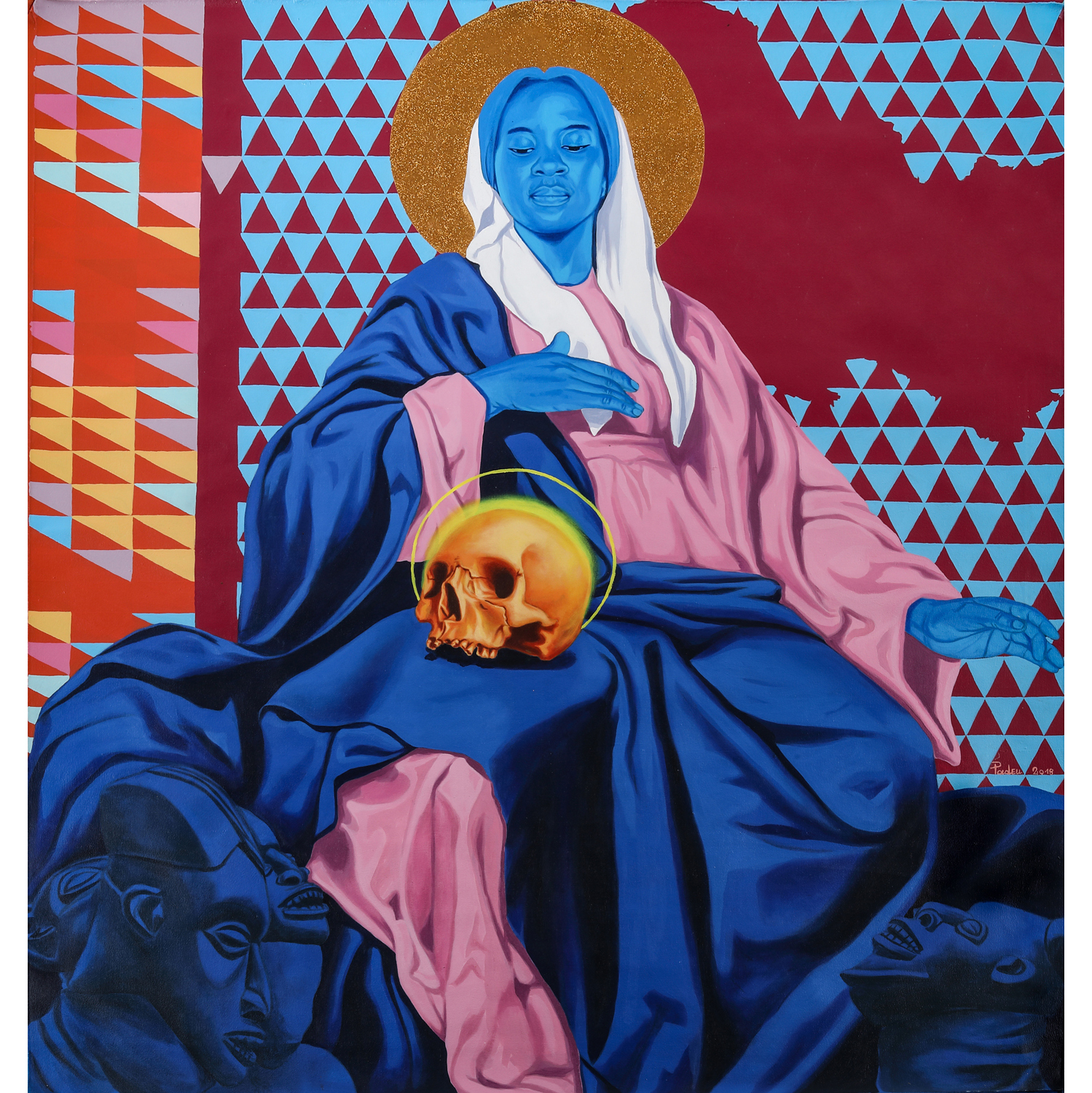
Vierge bleue, 2018
Sitting at the top of a pyramidal structure, La Vierge bleue (2018) was made using acrylic and glitter. At the feet of the Virgin Mary, the facets of the angular faces recall the wooden statuettes, considered since the end of the 19th century as true masterpieces of African classical art. The background on which the central person appears refers to the bright colours of carpets or other traditional drapes
Marc Padeu (né en 1990, Cameroun)
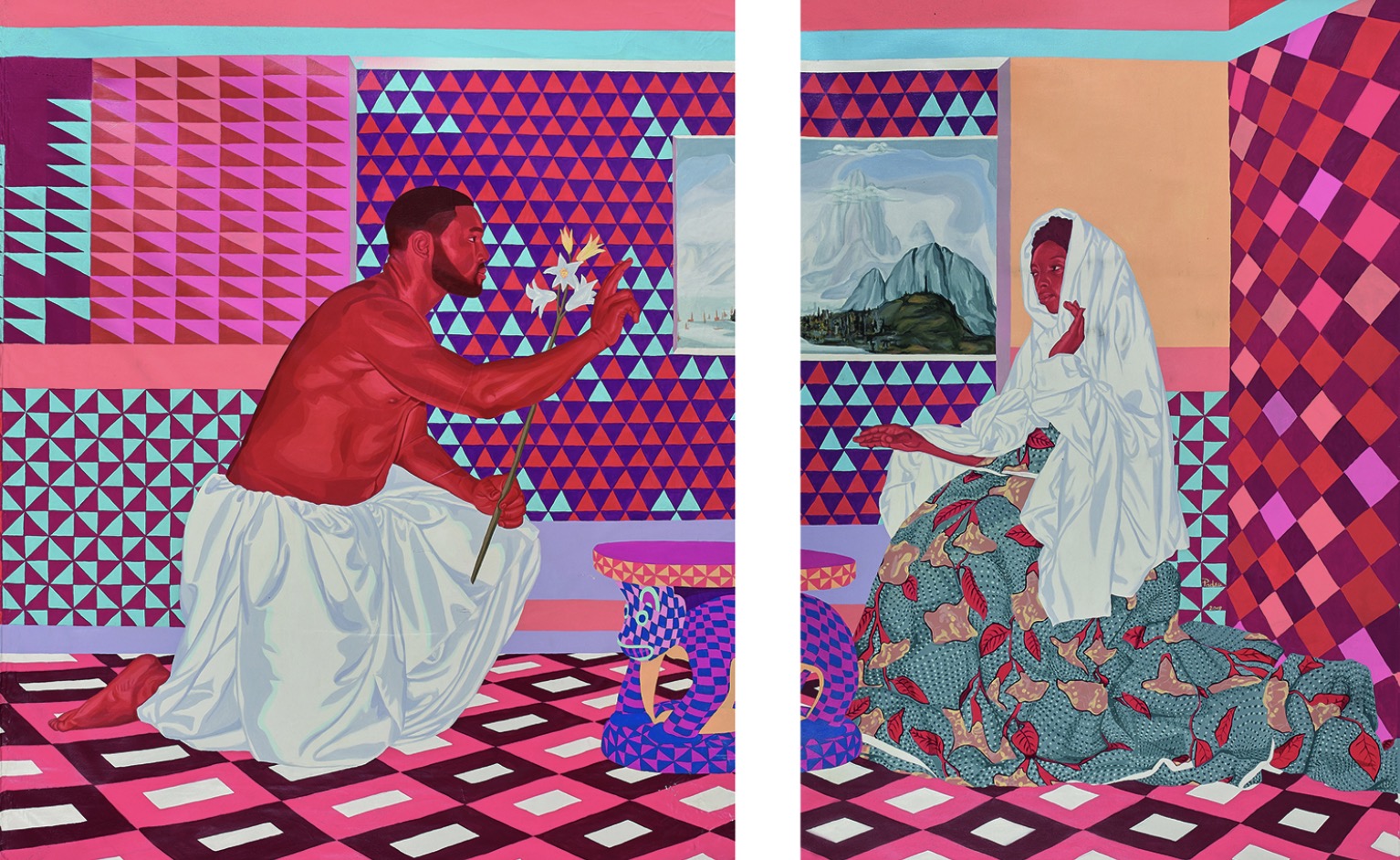
Annonciation, 2018
They are also found in the background of the Annunciation diptych. In this canvas, the chromatic variegation contrasts with the harmony of the blue shades that can be seen in the window frame. The mountainous topography that appears is a direct reference to the landscapes painted in the background by the famous Dutch artist Joachim Patinir (1483-1524).
Prolonging the countless occurrences proposed by Italian painting, the New Testament scene takes place in the foreground in an interior. The drapes wrapping the virgin and the coffee table are emblems that show the culture of the artist who still lives and works in his native Cameroon.
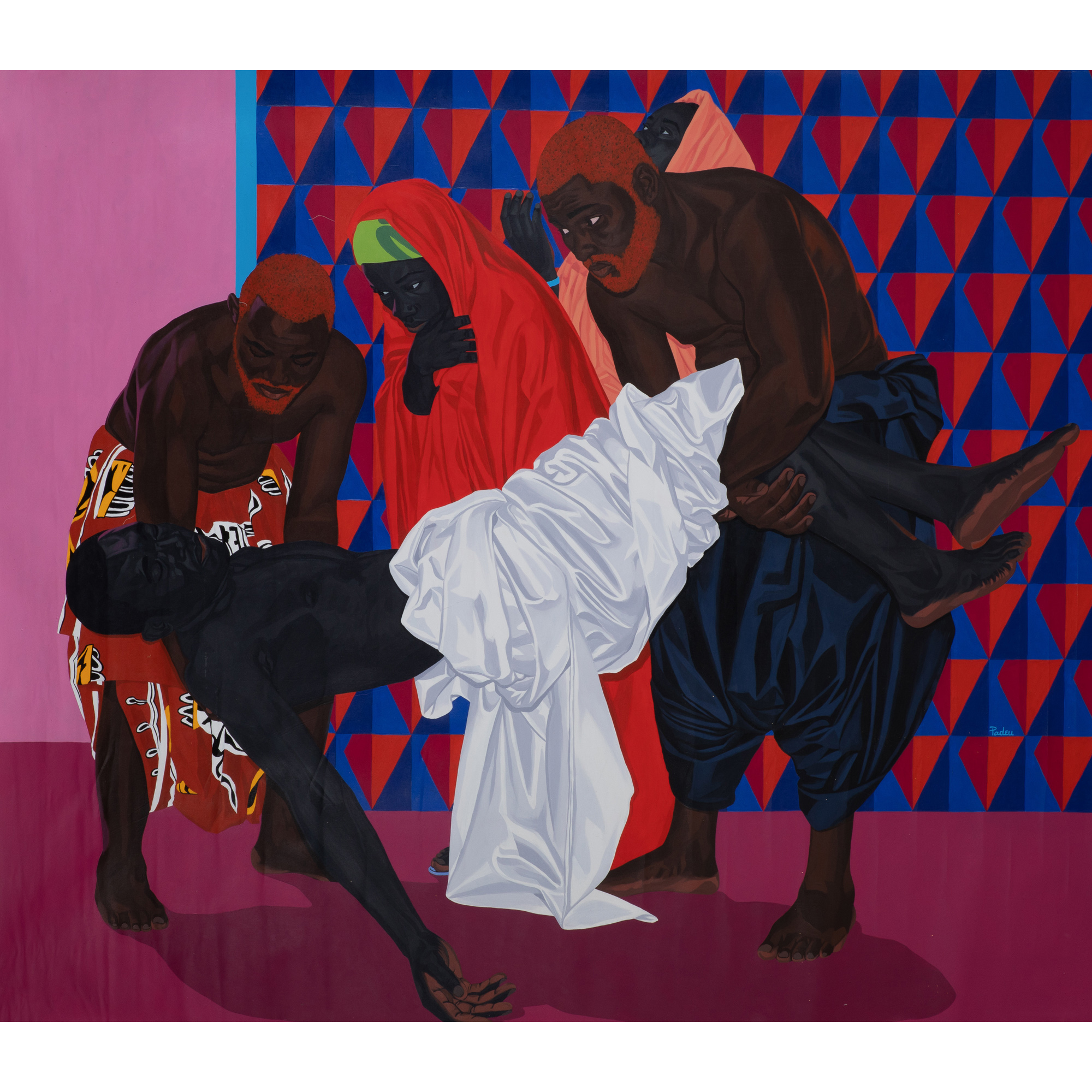
Marc Padeu (né en 1990, Cameroun)
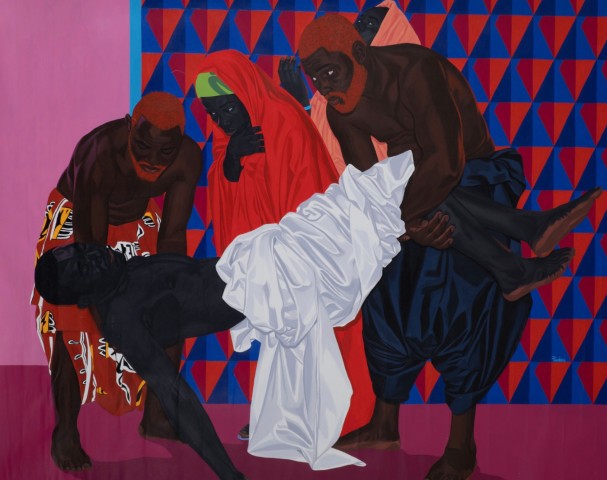
The king is dead, 2019
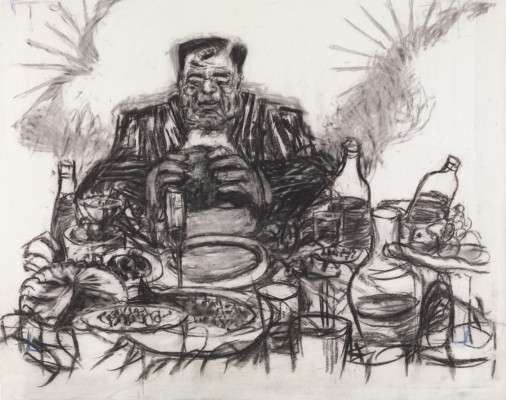
During the last session dedicated to contemporary African art, Marc Padeu was represented by several works including The King is Dead and Voici l'homme ! which respectively saw the auction soar.
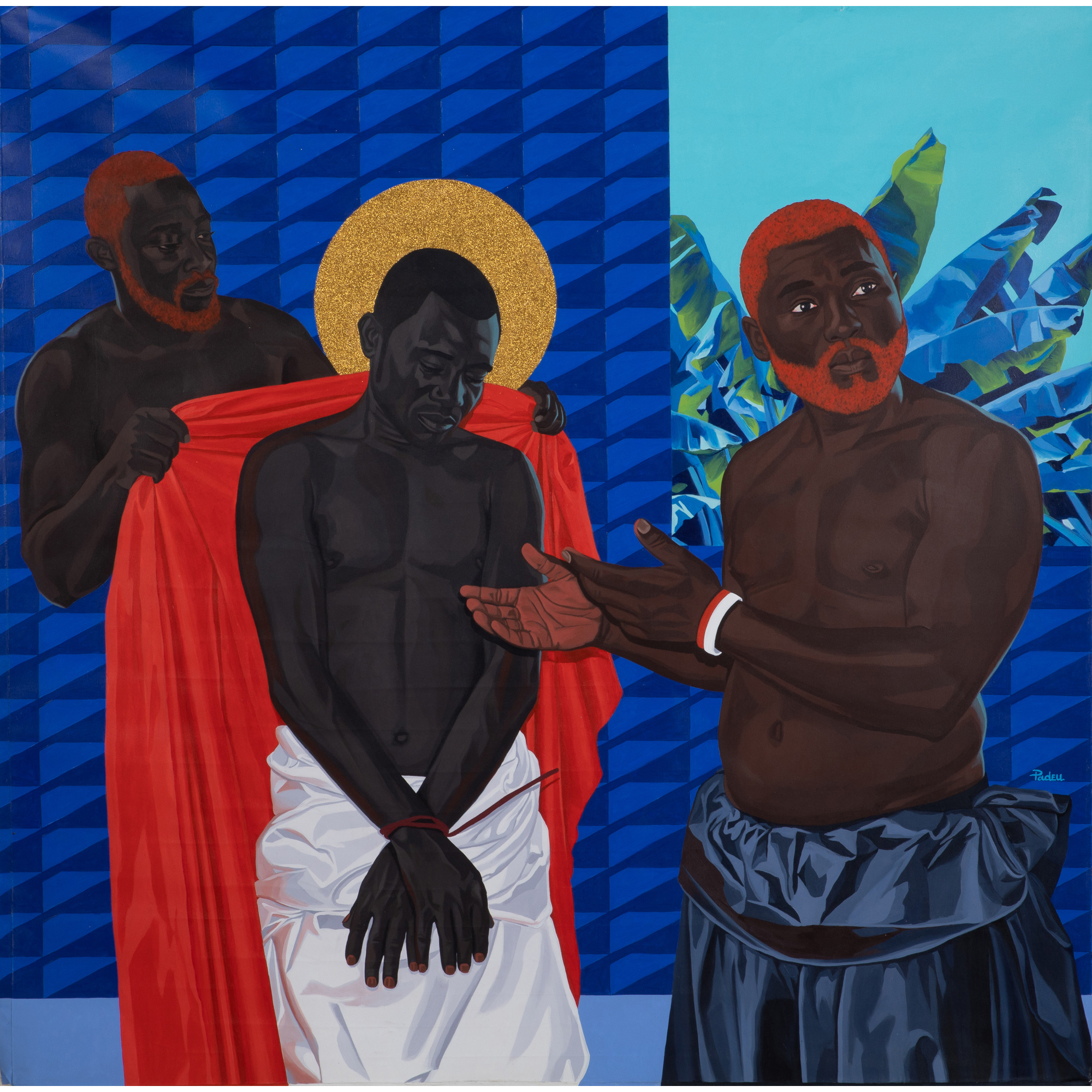
Marc Padeu (né en 1990, Cameroun)
Voici l'homme !, 2019
With this system of diversion and references to European iconography, Marc Padeu questions the complexity of the West's relations with Africa. From this point of view, the biblical scenes he reinvests are an echo of the current events on a continent regularly plunged into the darkness of violence, whether state or terrorist.
In recent years, his works have been included in the permanent collection of the World Bank in Washington, D.C., but also in important private collections on this side of the Atlantic.