


Leopold Survage, whose real name was Leopold Frederick Leopoldovich Stürzwage, was born in Moscow in 1879. A Russian painter, he was naturalized as a French citizen in 1927.
After leaving high school, the artist worked in his father's piano factory until 1900. He becomes a piano maker's apprentice. Attracted by drawing and painting, he entered the Moscow School of Fine Arts in 1901 with Constantin Korovine and Leonid Pasternak. In this pre-1917 Russia, he became familiar with European Modern Art during a visit to the private collection of Sergei Shchukin. He saw for the first time the paintings of Edouard Manet, Paul Gauguin, Henri Matisse and the Impressionists. Léopold Survage also meets the contemporary pictorial scene: Michel Larionov, David Bourliouk, Nikolaï Sapounov.
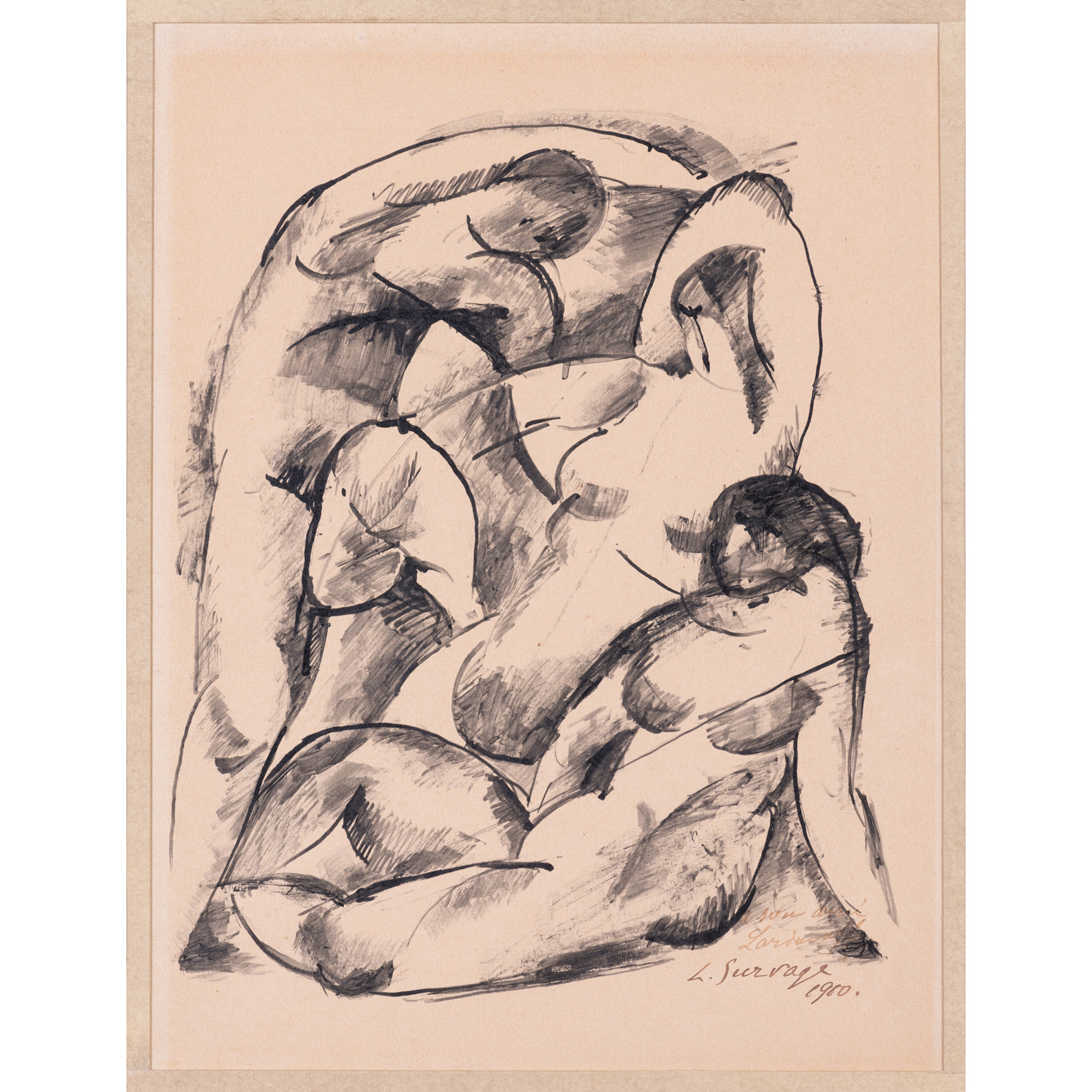 Léopold Survage (1879-1968)
Baigneuses et baigneur, 1910
3 000 / 5 000 €
His first paintings date from 1903. They are the subject of several exhibitions at the house of the Stroganov school. Ruined, his family left the Russian Empire and landed in Paris on July 12, 1908.
The painter began training at the Académie de la Grande Chaumière. He took part in group exhibitions as early as 1911, presenting works, a sort of analogy between coloured visual form and music.
Introduced into the Parisian artistic world by the poet Guillaume Apollinaire, he met Pablo Picasso, Gino Severini and the Delaunay couple.
After the First World War, during which he took refuge on the Côte d'Azur, he participated with artists such as Albert Gleizes, Georges Braque and Fernand Léger in the creation of the group known as the "Section d'Or".
Like several artists of the École de Paris, Léopold Survage worked, from 1922 onwards, for Serge de Diaghilev's Ballets Russes, for which he created the sets and costumes.
The end of the years is synonymous for him with success abroad. Publications and an exhibition in Chicago at the Chester Johnson Galleries make his work known in the United States.
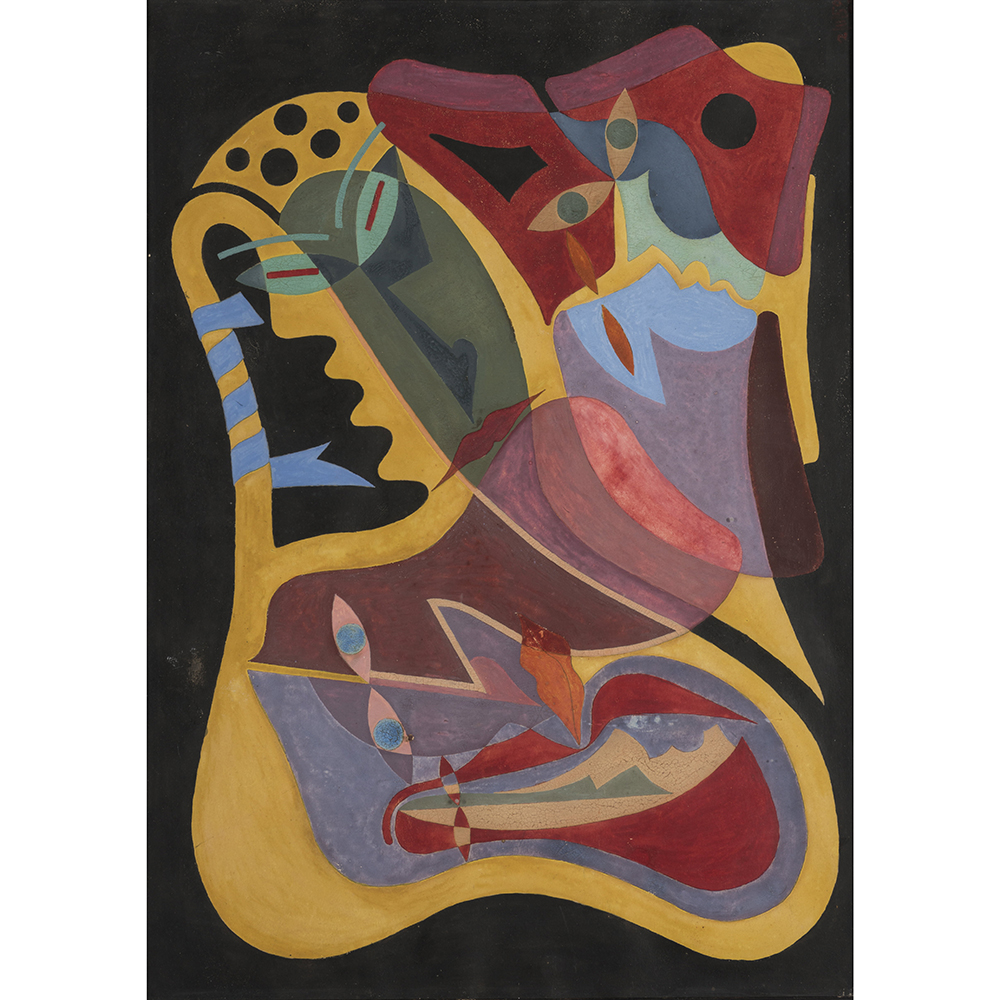 Léopold Survage (1879-1968)
Sans titre, 1950
Result: 9750 €
The boundaries of his work are porous. He makes fabric designs for the Chanel house as well as religious compositions, visible in the cathedral of Turku in Finland. For the Paris Arts and Techniques exhibition in 1937, he produced a series of monumental panels for the Palais des chemins de fer.
At the crossroads of the avant-gardes of the 20th century, Léopold Survage is the author of a work in which the chromatic range combines with forms to create a world.