


Marc Chagall belongs with the greatest creators to come to France during the 2Oth century. PIASA presents several of his works in the Editions: prints, illustrated books, multiples sale on Wednesday, June 6th. His peculiar style develops a unique symbolism inspired by his Jewish and Russian heritage. His genius, tinged with surrealism and primitivism, is shown in his painting, sculpture, enamels, stained glass, and etching.
Chagall was born in Vitebsk, Belarus, within the Russian Empire, in 1887 to a large and humble family. He is first confronted with art when he meets Jehuda Pen, a local painter. Between 1907 and 1909, he works in Saint Petersburg for the decoration workshop of the Ballets Russes. His trip to Paris in 1911 largely influences him: his color palette is brightened and he draws inspiration from the artistic avant-garde of Cubism and Fauvism. In Paris, he produces his first major works such as Golgotha (MoMA) and Homage to Apollinaire. From 1914 to 1922, he lives between Moscow and Saint-Petersburg and gets involved with precursor artists and intellectuals. His style blends whimsy and fantasy with futurist, cubist and suprematist influences.
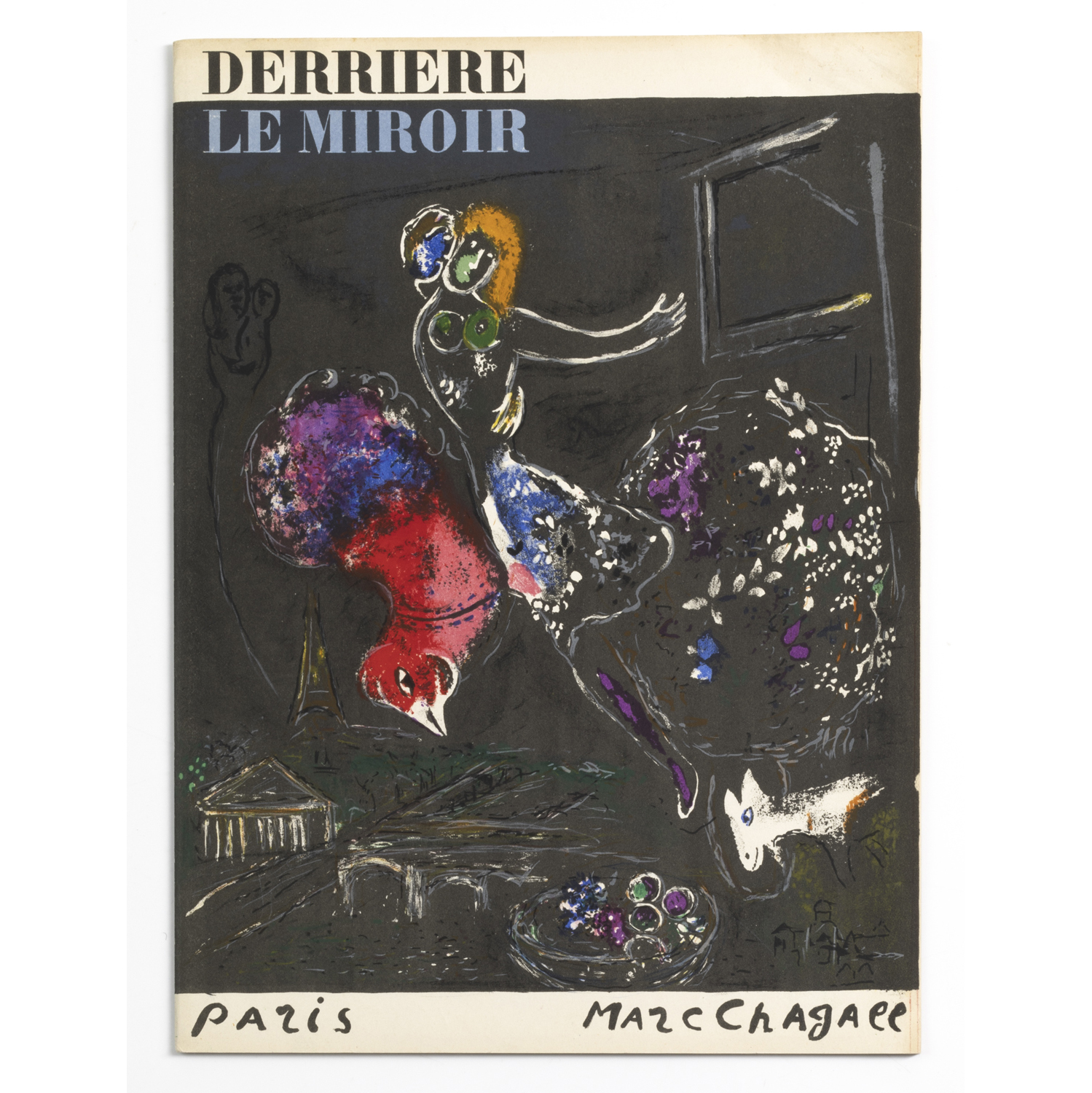
Lot 14 - Marc Chagall - Marcel Arland - Lionello Venturi
Derrière Le Miroir, 66 - 68, Paris, Marc Chagall
Sold 10 110 €
From 1923 to 1939, Chagall settles in Paris and works with renowned art dealer Ambroise Vollard. His style evolves, inspired by impressionism and a return to classicism. He meets writers André Breton, Jean Cocteau or Marcel Arland, whose works he will illustrate. PIASA presents a superb exemplar of DLM 66-68 (lot 14) illustrated by Chagall. This limited and high-quality print of the artistic magazine DLM includes eleven original lithographs. Also presented is a lithograph (lot 48) titled “Drawings for the Bible”, in excellent condition, a rare copy of of the cover of Verve magazine.
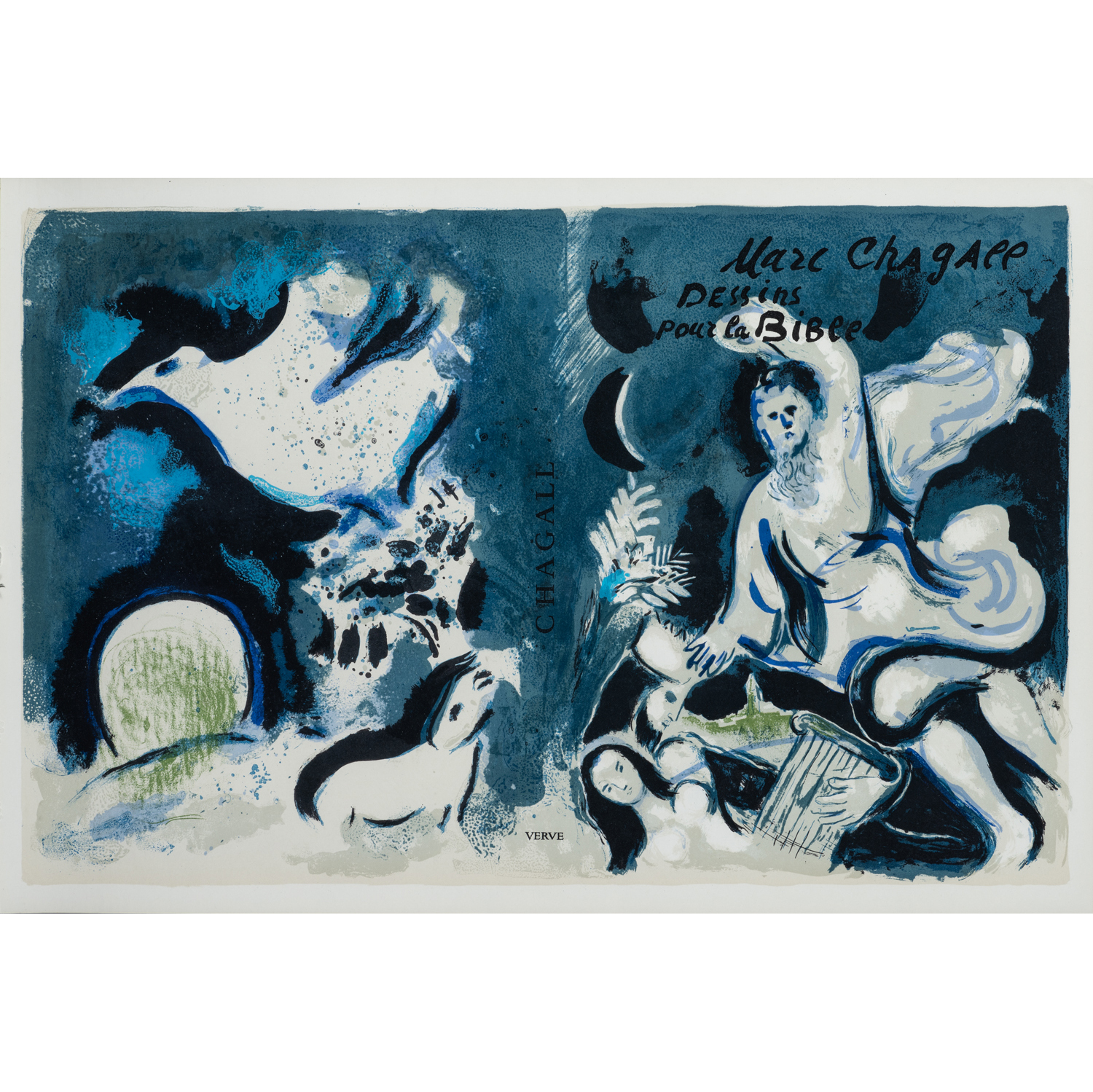
Marc Chagall (1887-1985)
Dessins pour la Bible - 1960
Exiled to the United States from 1941 to 1947, Chagall reconnects with the past, meeting Russian authors in New York and reigniting the Russian influences in his style. At the end of World War 2, Chagall is renowned throughout the world, retrospectives are organized in the MoMA and in Paris. Living in Vence, in Southern France, he keeps widening his palette of techniques and experiments with ceramics. Until the end of the 1970s, he answers important commissions: stained glass for the UN headquarters, painting the ceiling of the Opéra Garnier in Paris, tapestries for the Knesset.
